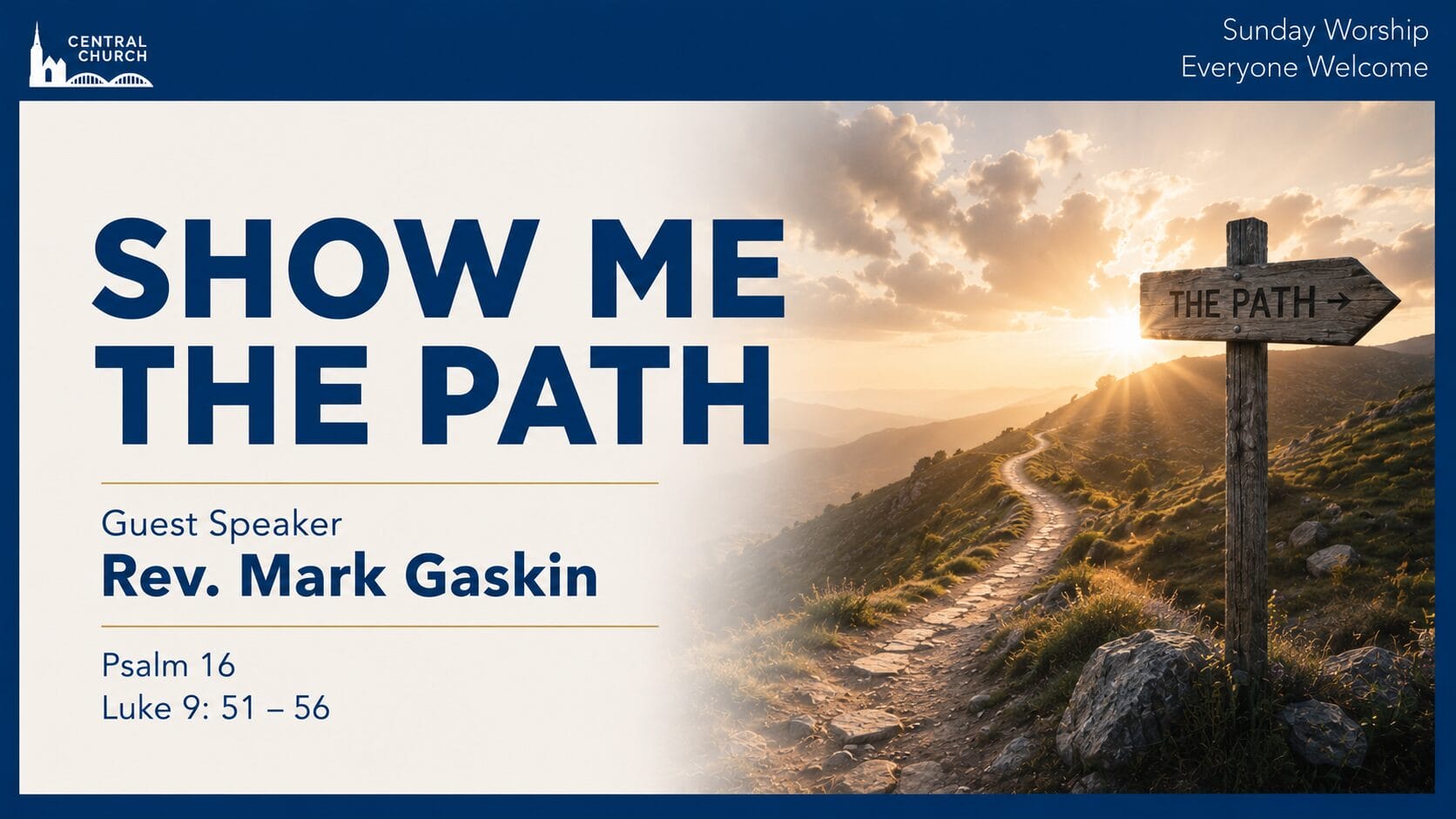
Psalm 16
A miktam of David.
1 Keep me safe, my God,
for in you I take refuge.
2 I say to the Lord, “You are my Lord;
apart from you I have no good thing.”
3 I say of the holy people who are in the land,
“They are the noble ones in whom is all my delight.”
4 Those who run after other gods will suffer more and more.
I will not pour out libations of blood to such gods
or take up their names on my lips.
5 Lord, you alone are my portion and my cup;
you make my lot secure.
6 The boundary lines have fallen for me in pleasant places;
surely I have a delightful inheritance.
7 I will praise the Lord, who counsels me;
even at night my heart instructs me.
8 I keep my eyes always on the Lord.
With him at my right hand, I will not be shaken.
9 Therefore my heart is glad and my tongue rejoices;
my body also will rest secure,
10 because you will not abandon me to the realm of the dead,
nor will you let your faithful one see decay.
11 You make known to me the path of life;
you will fill me with joy in your presence,
with eternal pleasures at your right hand.
Luke 9:51-56
Samaritan Opposition
51 As the time approached for him to be taken up to heaven, Jesus resolutely set out for Jerusalem. 52 And he sent messengers on ahead, who went into a Samaritan village to get things ready for him; 53 but the people there did not welcome him, because he was heading for Jerusalem. 54 When the disciples James and John saw this, they asked, “Lord, do you want us to call fire down from heaven to destroy them[a]?” 55 But Jesus turned and rebuked them. 56 Then he and his disciples went to another village.
Transcript
(Transcribed by TurboScribe) Guest Speaker - Rev. Mark Gaskin
No, Alexander, it was all, it was all done in in good humour, and I appreciate this time of rebuttal. When I was here previously, actually what I'll do is follow up on an announcement that that Alexander made. You're watching online, that's wonderful.
I hope you feel part of the worshipping community today. If you are watching us because you're looking for a church to attend, this is a great church to come to. The worship service begins at 10 o'clock on a Sunday morning.
You can show up a few minutes after that, but as a courtesy to the production team and to the praise band, you may want to show up, especially if you're the preacher. You may want to show up a little bit before that, but you will be, no matter what time you show up, you will be warmly greeted and made to feel welcome by this wonderful community of believers. Our first reading is Psalm 16, some selected verses.
Protect me, O God. I trust in you for safety. I say to the Lord, you are my Lord.
All the good things I have come from you. You, Lord, are all I have, and you give me all I need. My future is in your hands.
How wonderful are your gifts to me, how good they are. I praise the Lord because he guides me, and in the night my conscience warns me. I am always aware of the Lord's presence.
He is near, and nothing can shake me. And so I am thankful and glad, and I feel completely secure because you protect me from the power of death. I have served you faithfully, and you will not abandon me to the world of the dead.
You will show me the path that leads to life. Your presence fills me with joy and brings me pleasure forever. And from the New Testament, from the Gospel according to Luke, Chapter 9, a story that is unique to Luke.
Matthew and Mark and John do not record this event. And I think I partly understand why. It is very low-key.
There's no healing. There's no miracle. There's no parable.
There's no teaching. But I believe, clearly, I believe it delivers a very strong message, which I will develop in the sermon from Luke's Gospel, Chapter 9. As the time approached for him to be taken up to heaven, Jesus set out for Jerusalem. He sent messengers on ahead who went into a Samaritan village to get things ready for him.
But the people there did not welcome him because he was heading for Jerusalem. When the disciples, James and John, saw this, they asked, Lord, do you want us to call fire down from heaven to destroy them? But Jesus turned and rebuked them. Then he and his disciples went to another village.
Amen. In the name of the Creator, the Redeemer, and the Sustainer. Amen.
I will let the production team know I'm just walking over here. I'll be back to where I'm supposed to be in a minute. I think they're just happy to see that I'm here.
But it's within the nature of human beings that we have conflicts with each other, disagreements. There's lots of adjectives for it. Fights, conflicts, disagreements, friction with each other.
Some say it's innate, part of our psyche. We are animals and animals fight. Some say it's learned behaviour, that if we see violence around us and it becomes normalised, then, and this can happen even when we see that it's harmful to others and even harmful to ourselves, we still see it as a part of life.
So this is the old debate, right? Nature versus nurture when it comes to conflict. We're not settling that debate this morning, but we're going to look at it because we see it in the ninth chapter of Luke near the end of that chapter. What do we fight about? Well, we can fight about everything and anything, right? We can have disagreements over politics, religion.
I'm trying to think about, for a moment there, I was trying to think, what don't we fight about? That list is shorter. We have disagreements about lots of things. Our differences can be racial, religious, nationality.
We know that there are long standing disagreements between the ancient religions of our world. Jews versus Muslims, Muslims versus Christians, Christians versus, it goes on. Even within a Christian community, there can be disagreements.
There are long historical disagreements between nations of the world. You can't look really at any part of the world that hasn't, isn't currently facing some kind of conflict or does not have conflict in its past, a non-ancient past. As a country, we've had conflicts even within North America.
So, conflict, fight. We do it everywhere. It can be about anything.
It can happen at any time. But all these conflicts have one thing in common, as different as the cause where they take place, as different as they are, they still have one thing in common. Somebody is the bad guy.
Some group of people are the bad people. They are wrong. I am right.
That's always at the source of the conflict, regardless of what it's about, where it takes place, when it takes place. Somebody's wrong, somebody's the bad guy, and somebody's right, the good guy. It's interesting how I'm doing it that way, isn't it? Somebody there is the bad guy, and somebody is the good guy.
So it is with this awareness that we approach today's gospel. It's not a well-known story in the New Testament, as I said earlier, that it's unique to Luke. It's the kind of story that can be forgotten, as I said, no miracles, no parable, no teaching.
The story goes like this. Jesus is up north in Galilee. He's getting ready to go south to Jerusalem, and he had to pass through the land of Samaria.
The Jews and Samaritans did not like each other, and that dispute, conflict, fight went back hundreds of years, long before Jesus was even born. They did not talk to one another. They didn't intermingle.
They did not intermarry. So who's the bad guy in this conflict between Jews and Samaritans? Well, it's James and John, to make it very clear. It's the other guys.
It is the Samaritans. Jesus is going south, going through Samaria. He had sent people ahead of him to make arrangements.
They were not welcomed, and then Jesus, as he came into the village, was not made to feel welcomed. The two brothers, James and John, who are part of the Twelve, when they came to realise this, they got upset, to say the least. We're not surprised that James and John are the two disciples that act this way.
They are called Sons of Thunder. We hear that designation about them earlier in the Gospels. They have thunderous personalities.
They have thunderous prejudices, and they clearly have thunderous tempers. They go to Jesus, who is in the village now, and say, Master, do you want us to call down fire from heaven to destroy them? That seems like an overreaction. They were just not made to feel welcome.
They weren't threatened. They weren't mocked, ridiculed, but clearly hundreds of years of prejudice and hatred are coming to the forefront, and this slight, this disrespect, this unwelcome attitude has just sent James and John right over the edge. Lord, let's call down fire from heaven so it's coming from the right place.
Let's call down fire from heaven and not warn them, not teach them a lesson, destroy them. What happens next is remarkable. It's subtle.
It's one of the reasons I think this passage is not amongst the best known. Jesus rebukes them. That's all that's in the Gospel.
Jesus rebuked them, and then what happens next is even more remarkable. Jesus and his disciples went to another village. That's how the story ends.
Jesus rebukes, and then he and the disciples went on to another village. I have some sympathy for the disciples. I've been angry in my past.
I got upset and angry as a kid, as a child, as a teenager, as a young adult, as my middle age, as a senior. I think there is a little more calmness in my senior years, but I can still get upset and angry. But when I look back at all those years and look at the present time, I know there is not one time when I made a good decision when I was angry.
I made decisions when I was angry, and I regretted every one of them. I never made a good decision when I was angry. In the confidentiality of the Central Sanctuary and our online community, I will admit, maybe once or twice or ten times, I thought, you know what would teach these guys a lesson or this guy a lesson? Let's bring down a little fire from heaven and, well, not destroy them.
I have some conscience. Singe them just around the edges just so they know who's on my side. But that's not what Jesus wants from us.
Jesus doesn't want us to seek revenge. Jesus doesn't want us to seek punishment, to see them destroyed or singed. So what are we supposed to do with that feeling that's in us? They've done us wrong.
He's done it. She's done it. They've hurt.
I'm disappointed. I'm angry. What am I supposed to do with those feelings? Jesus wants you and I to go to another village.
That's what he did. That's what he asked his disciples to do. Going to another village is not an act of defeat.
It's not giving in. Going to another village is an act of faith. The psalmist said, you will show me the path that leads to life.
The path that leads to life is not a path that allows bitterness to determine the direction of our lives. The path that leads to life does not allow old wounds, old hurts, old arguments, old prejudices to keep us captive, to keep us where we are. The path that leads to life sometimes leads to another village.
The path that leads to life trusts that God can do more with forgiveness than we could do with retaliation. Jesus could have called down judgement. That certainly was within his power.
And that is what James and John wanted him to do. But Jesus chose a different path. He chose compassion.
He chose mercy. He chose peace. He chose to keep moving toward the work that God had given him to do.
And that's his invitation to us. It was his invitation to the disciples. Let us go on to another village, to the next village, to a place where we will be welcomed.
That they'll hear us, listen to us. So there may be somebody in your life today that you've thought for days or weeks, months, sometimes years, but that's the other guy. That's the person who hurt you or disappointed you, offended you, opposed you.
Jesus asks us to lay down the desire for revenge, to let go of the burden of resentment, and continue to walk towards the path that leads to life. The world teaches us to ask, who's the bad guy? Who's hurt me? Who's made me angry? The world teaches us to ask that question and to stay there looking for the answer. Jesus asks us, how can I love my neighbour? The world says, destroy your enemies.
Jesus says, love your enemies and pray for them. The world keeps score. Jesus offers grace.
My prayer for you this morning, the week, months to come, is the same prayer I'm saying for me right now. Give me the courage to move on to another village. Give me the courage to seek peace rather than punishment.
Give me the courage to see that I'm being asked to turn enemies into people I have compassion for. In doing any of that, there is a possibility that that changes the other person, but it definitely changes us.
Amen, and so be it.