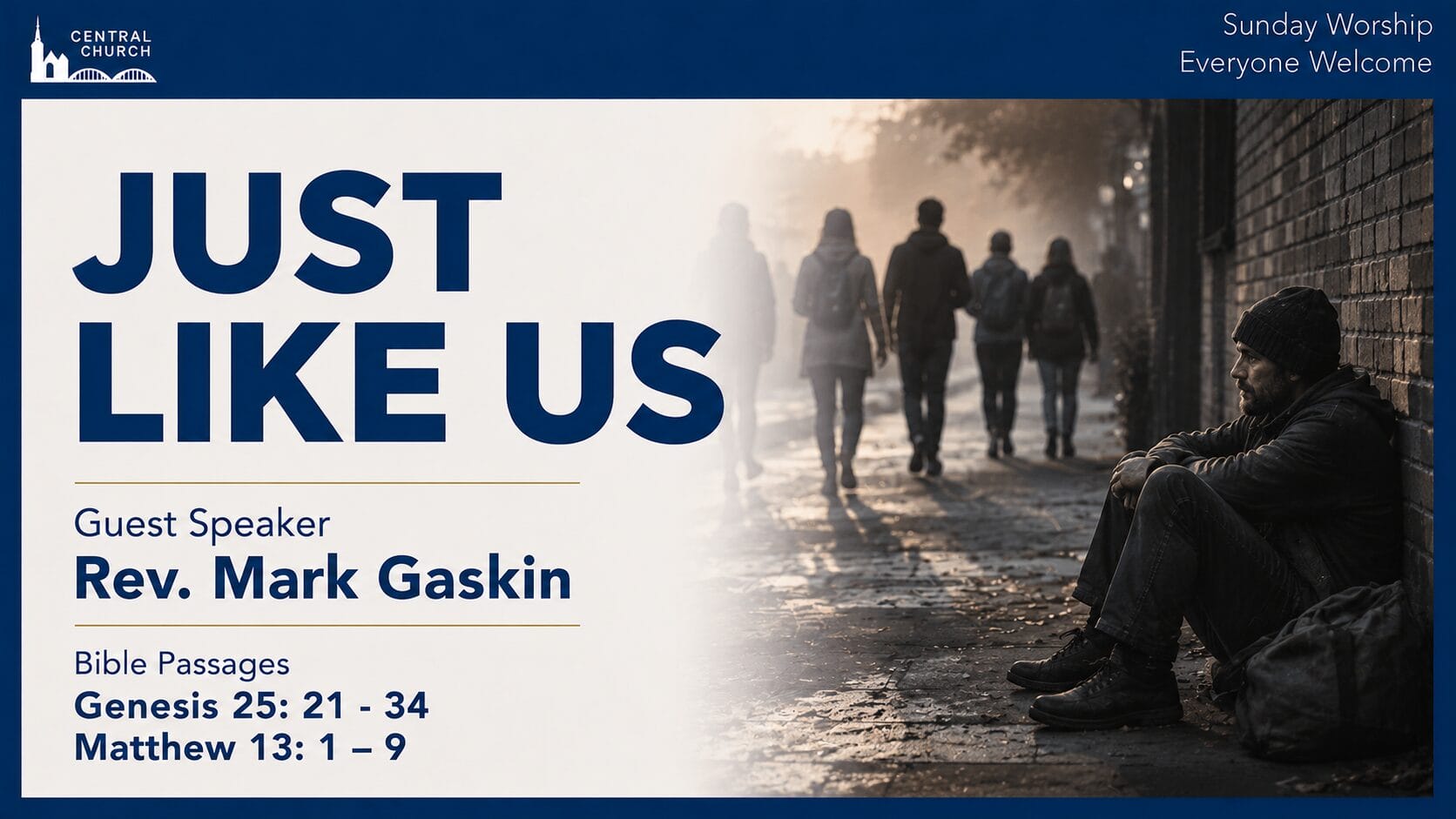
Genesis 25:21-34
21 Isaac prayed to the Lord on behalf of his wife, because she was childless. The Lord answered his prayer, and his wife Rebekah became pregnant. 22 The babies jostled each other within her, and she said, “Why is this happening to me?” So she went to inquire of the Lord.
23 The Lord said to her,
“Two nations are in your womb,
and two peoples from within you will be separated;
one people will be stronger than the other,
and the older will serve the younger.”
24 When the time came for her to give birth, there were twin boys in her womb. 25 The first to come out was red, and his whole body was like a hairy garment; so they named him Esau.[a] 26 After this, his brother came out, with his hand grasping Esau’s heel; so he was named Jacob.[b] Isaac was sixty years old when Rebekah gave birth to them.
27 The boys grew up, and Esau became a skillful hunter, a man of the open country, while Jacob was content to stay at home among the tents. 28 Isaac, who had a taste for wild game, loved Esau, but Rebekah loved Jacob.
29 Once when Jacob was cooking some stew, Esau came in from the open country, famished. 30 He said to Jacob, “Quick, let me have some of that red stew! I’m famished!” (That is why he was also called Edom.[c])
31 Jacob replied, “First sell me your birthright.”
32 “Look, I am about to die,” Esau said. “What good is the birthright to me?”
33 But Jacob said, “Swear to me first.” So he swore an oath to him, selling his birthright to Jacob.
34 Then Jacob gave Esau some bread and some lentil stew. He ate and drank, and then got up and left.
So Esau despised his birthright.
Matthew 13:1-9
The Parable of the Sower
13 That same day Jesus went out of the house and sat by the lake. 2 Such large crowds gathered around him that he got into a boat and sat in it, while all the people stood on the shore. 3 Then he told them many things in parables, saying: “A farmer went out to sow his seed. 4 As he was scattering the seed, some fell along the path, and the birds came and ate it up. 5 Some fell on rocky places, where it did not have much soil. It sprang up quickly, because the soil was shallow. 6 But when the sun came up, the plants were scorched, and they withered because they had no root. 7 Other seed fell among thorns, which grew up and choked the plants. 8 Still other seed fell on good soil, where it produced a crop—a hundred, sixty or thirty times what was sown. 9 Whoever has ears, let them hear.”
Transcript
(Transcribed by TurboScribe)
Well, thank you, Alexander, and thank you for all those who make me feel welcome on a Sunday morning in your own special way. I mentioned this last week. There's a lot of good natured teasing that goes on, and that's simply because, as Alexander shared, I've known the congregation a long time.
I guess it was 2009, I came to what was then St. Andrew's Church, just up the hill, and a few years later, St. Andrew's and St. Giles amalgamated and became Westside Presbyterian Church, and stayed for several, well, more than some years after that, and retired, I think it would be about four years ago, but still active in ministry. I enjoy attending churches, church services on those Sundays. I'm not preaching elsewhere, but one of the things I look forward to is being here for a few weeks in the summer.
So, again, thank you to Aubrey and the session for the invitation. Two readings this morning, from the book of Genesis and then from Matthew. Let us hear God's word.
Isaac prayed to the Lord on behalf of his wife because she was childless. The Lord answered his prayer, and his wife Rebecca became pregnant. The babies jostled each other within her, and she said, why is this happening to me? So she went to enquire of the Lord.
The Lord said to her, two nations are in your womb, and two peoples within you will be separated. One people will be stronger than the other, and the older will serve the younger. When the time came for her to give birth, there were twin boys in her womb.
The boys grew up, and Esau became a skilful hunter, a man of the open country, while Jacob was content to stay at home among the tents. Isaac, who had a taste for wild game, loved Esau, but Rebecca loved Jacob. Once when Jacob was cooking some stew, Esau came in from the open country, famished.
He said to Jacob, quick, let me have some of that red stew. I am famished. That is why he is also called Edom.
Jacob replied, first sell me your birthright. Look, I'm about to die, Esau said. What good is a birthright to me? But Jacob answered, swear to me first.
So he swore an oath to him, selling his birthright to Jacob. Then Jacob gave Esau some bread and some lentil stew. He ate and drank, and then got up and left.
From Matthew's Gospel, chapter 13, that same day Jesus went out of the house and sat by the lake. Such large crowds gathered around him that he got into a boat and sat in it while all the people stood on the shore. Then he told them many things in parables, saying a farmer went out to sow his seed, and as he was scattering the seed, some fell along the path and the birds ate it up.
Some fell on rocky places where it did not have much soil. It sprang up quickly, but because the soil was shallow. But when the sun came up, the plants were scorched, and they withered because they had no root.
Other seed fell among the thorns, which grew up and choked the plants. And still other seed fell on good soil, where it produced a crop a hundred, sixty, or thirty times what was sown. Whoever has ears, let them hear.
Amen. In the name of the Creator, the Redeemer, and the Sustainer. Amen.
We are told earlier in Genesis that for twenty years Isaac and Rebekah had prayed for a child. Finally their prayers are answered, and the miracle of conception came. But it wasn't smooth sailing.
Even in the womb, the twins were struggling with one another. It's a foreshadowing of what would continue on throughout their whole lives. It leads Rebekah to ask, while the twins are still in the room, it leads Rebekah to ask, why is this happening to me? And God answers, two nations are in your womb.
One people shall be stronger than the other, and the elder shall serve the younger. We're not told within the text how Rebekah would have received this news. It helps us understand what is about to unfold in foreshadows what's taking place.
But it wouldn't have been immediate help at that time, and especially that latter phrase, the elder shall serve the younger. As I say, it's not said in the text, but Rebekah must have said to herself, oh this does not bode well, because that's not the culture. That's not the custom.
Firstborn, the elder, that's the head, and the younger siblings serve the elder, but that's not what Rebekah is told. Esau is born first. Jacob falls close behind, grasping at his brother's heel.
Even that small detail foreshadows the life that Jacob will lead, always grabbing and holding on. In fewer than 15 verses, the twins grow from newborns to young men, yet very little has changed in their lives or in their personalities. They were different in the womb, and they are different outside.
Esau is impulsive. He's driven by the moment, never thinking things all the way through. Jacob is patient, calculating, and as we see, he's very opportunistic.
With that understanding of who these twins were and their personalities, we come to the latter part of the story that I read to you. Esau comes in from the field, exhausted and starving. Let me have some of that red stew, I am famished.
Jacob replies, sure. First, sell me your birthright. Sell.
You're firstborn. I'm to serve you. Sell it.
Not even give it. Sell it to me. Esau, again, in the moment, not thinking it through.
I'm about to die. What good is a birthright to me? And just like that, Esau gives away the birthright over a bowl of lentil stew. Now, I know something about the persuasive power of a good bowl of food.
I know I've mentioned, I'm sure I've mentioned this before. After all, I've been coming here for some years. I'm sure I've mentioned the trophy I received for cooking chilli.
Just happen to have it here. I have it at home, but if there's a display case, I'm happy to leave it later. Yes, the People's Choice Award from 2003.
Okay, a few years ago. The Rotary Club of Brantford Sunrise, the ninth annual chilli cook-off, June 21st, 2003. The People's Choice.
Not just awarded by, the people spoke and gave me and my team this, I know the power of a good bowl of food. Now, some of you are saying, wait a minute, 2003, anything more recent? Funny you should ask. I thought I heard somebody ask.
2020, just before the world changed, we had in February of 2020, we had our annual Super Bowl contest up at Westside. Super, S-O-U-P-E-R. And yes, if you are asking, I placed in the top 10 of that competition.
There were nine of us in entry, but that still places me in the top 10. A good bowl of chilli, soup, stew, that can certainly be tempting. But it's probably not worth however good it is.
It's not worth your inheritance, your birthright. Neither brother comes out of this encounter looking particularly good. Esau acts impulsively with little thought for the future.
Jacob sees his brother's weakness. He sees it and he exploits it. Neither brother comes out looking good.
And let us not completely overlook the parents. It says within the text, the father favoured one child and the mother favoured the other. It's not just the brothers are not looking good.
The family is not looking particularly good. Later in the book of Genesis, Jacob will deceive his own ageing father as well. So where does this ancient family story, and I know many of you would be familiar with this story, where does that ancient story about a long ago family meet us today in our circumstances? With our families.
Well, when we think about our families, most of us still feel the pressure to convince the world that everything's fine. Most often that's certainly the image we would like to project in a natural way, that everything is okay. Family is normal.
Everything's under control. But when we're honest, and we can be honest with each other at times and with good friends, when we're speaking a little more honestly and it feels safe to do so, we know better. We know families can be complicated.
We know relationships can be strained. Old wounds can linger. Misunderstandings happen, and sometimes as they're explained, the situation does not get better.
I've offered enough explanations over a misunderstanding that I have successfully made the situation worse with my explanations. Sometimes the people we love the most are the ones who can hurt us the most. And yet, let's get to this, and yet God is still present.
God is still there in the midst of that, in the midst of the strain, and the misunderstanding, and the friction, and the tension. That's one of the great gifts of the stories in the book of Genesis. The very first book, the book that not only emphasises our ongoing, our original and ongoing relationship with God, but also talks about the families that are within that relationship with God.
The Bible never pretends that God's people are flawless. The Bible never pretends that families are not without their challenges. Quite the opposite.
Again and again, God chooses to work through people. Again and again, God chooses to work through families that are imperfect. At the heart of Genesis is the inspiring truth that God accomplishes God's purpose through some of the strangest, most awkward, most hard-to-understand families imaginable.
When God looked across the world for people through whom to bless the nations, that's where that phrase comes from Genesis, when God looked for people through whom to bless the nations, God did not choose people who seemed to have it all together, who had no flaws, that had never known challenges. Sometimes it looks like God would choose the B team, that God would choose not the best and the brightest, but God would still choose them. Families that argue, families that failed, people who doubted, people who made terrible decisions.
God would still use them, people just like us. Many of the stories in Genesis make the very first book, as I said, of God's story with God's people. Many of the stories make this wonderfully clear.
We do not have to be perfect before God can use us. We do not have to have everything figured out before God can bless us. We do not have to belong to a flawless family before God can call us to be a blessing to others.
The good news is that God does not wait for perfect people. The good news is that God is faithful even when we are not. If God could work through Isaac and Rebecca, if God could work through Esau and Jacob, if God could bring blessings to people, to nations, to the world through that family, then surely God can work through us and ours.
You've heard me say in the past, and I mean it with the utmost sincerity, Central Church has a lot going for it. And I hope this doesn't shock you. But it's not because you're perfect.
I've never heard anyone claim that about Central Church. What I have heard, it's a group of people who care about each other, who care about the neighbourhood they're in, who care about the community that you're part of. Not perfect, but perfectly caring people.
This is a church that God has, that God can, and God will continue to work through. Because by the grace of God, we are exactly the kind of people that God has always used and loved to use. People, people just like us.
Amen, and so be it.