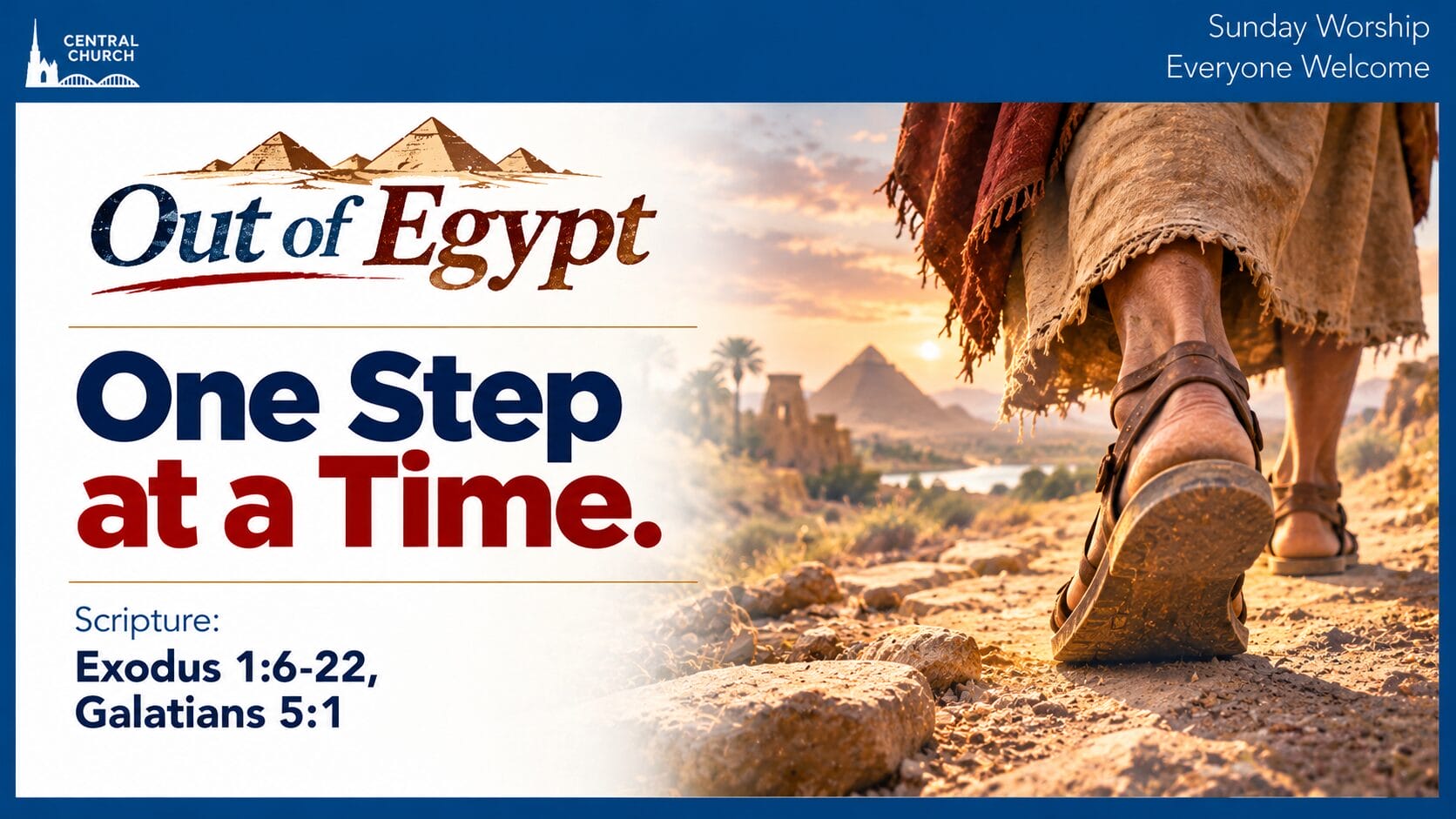
Exodus 1:6-22
6 Now Joseph and all his brothers and all that generation died, 7 but the Israelites were exceedingly fruitful; they multiplied greatly, increased in numbers and became so numerous that the land was filled with them.
8 Then a new king, to whom Joseph meant nothing, came to power in Egypt. 9 “Look,” he said to his people, “the Israelites have become far too numerous for us. 10 Come, we must deal shrewdly with them or they will become even more numerous and, if war breaks out, will join our enemies, fight against us and leave the country.”
11 So they put slave masters over them to oppress them with forced labor, and they built Pithom and Rameses as store cities for Pharaoh. 12 But the more they were oppressed, the more they multiplied and spread; so the Egyptians came to dread the Israelites 13 and worked them ruthlessly. 14 They made their lives bitter with harsh labor in brick and mortar and with all kinds of work in the fields; in all their harsh labor the Egyptians worked them ruthlessly.
15 The king of Egypt said to the Hebrew midwives, whose names were Shiphrah and Puah, 16 “When you are helping the Hebrew women during childbirth on the delivery stool, if you see that the baby is a boy, kill him; but if it is a girl, let her live.” 17 The midwives, however, feared God and did not do what the king of Egypt had told them to do; they let the boys live. 18 Then the king of Egypt summoned the midwives and asked them, “Why have you done this? Why have you let the boys live?”
19 The midwives answered Pharaoh, “Hebrew women are not like Egyptian women; they are vigorous and give birth before the midwives arrive.”
20 So God was kind to the midwives and the people increased and became even more numerous. 21 And because the midwives feared God, he gave them families of their own.
22 Then Pharaoh gave this order to all his people: “Every Hebrew boy that is born you must throw into the Nile, but let every girl live.”
Galatians 5:1
Freedom in Christ
5 It is for freedom that Christ has set us free. Stand firm, then, and do not let yourselves be burdened again by a yoke of slavery.
Transcript
(Transcribed by TurboScribe)
Thank you for this moment of being in your Word. Thank you that your Word will speak into our lives again today. May we see Jesus and only Jesus.
Amen. Ted, you have a slide that I'd like you to put on there for us, please. Thank you.
I want you to look at the statement on the screen for a moment. And then take a moment to fill in the blank. I wish I could be set free from.
Now, I'm not going to be so presumptuous as to try and fill in blanks for you. Because each one of us has our own life to live. But I will be a little presumptuous and say that I don't think there's anyone sitting in this place that does not have something to fill in in that blank.
And from my own experience, what I know as well is that those blanks or the things that go in those blanks can be really debilitating in our lives. So, for the next two weeks, I want to talk with you about what we fill in in those blanks. The things that prevent us of being free but actually put us in bondage.
Because here's the thing, and Ted, there's a slide for this. Paul reminds us in the book of Galatians, he says, it is for freedom that Christ has set us free. Stand firm then and do not let yourself be burdened again by a yoke of slavery.
Christ died for us so that we can be set free from the things that we're putting in those blanks. So, do not allow whatever put in that blank to become that burden that puts you in. When we think of that yoke, remember how they put them in those? Don't let that thing put you in that yoke.
What are those blanks? What do we do with them? You can ask the book of Exodus to help us to get rid of them, to learn how to, can I take Matthew again that Jesus said, to live lightly and freely. Because the book of Exodus tells the story of how God takes these people from the land of Egypt, from slavery, and brings them into a land where they can live freely and lightly and filled with the joy of the Lord. But here's the thing.
What God did for them in that story and in the stories we're going to read today and next week, what God did for them was only a preview, a little glimpse of what God does for us through Jesus. Because here's the thing. The story in Exodus is not just their story.
It's our story. It's my story. It's your story.
It's God's story of leading us into freedom step by step by step. So our reading is going to come from Exodus chapter 1. Going to start in verse 6. But before we read, let me set the scene for you. And that gives Ted a chance to be able to get his slides ready for the next one as well.
Let me just set the scene for you. Genesis 12. God comes to a man called Abraham.
God says to him, Abraham, I want you to be a blessing to this world. So I'm going to make you two promises. I'm going to give you many descendants.
And the second promise, I will give you a land in which you can live and prosper. And God fulfilled both of those promises. A little boy is born.
And Jay and Shiloh have a little boy that's called the same. His name is Yitzhak, Isaac, the son of laughter. The little boy of laughter.
Because Sarah said, they're going to laugh at me. Who's going to have a baby at 100? Be happy, ladies. Your name is not Sarah.
And this little boy of laughter was born. And then God blessed him with twins. And one of the twins was called Jacob.
Jacob would later become Israel. And he had 12 boys. The older ones didn't like the younger one because he was a little presumptuous in himself.
His name was Joseph. They sold him into Egypt. And he became a slave.
And I did a whole series for you on that. So I don't have to explain anything of that. Became a slave.
But he came out of slavery and became what we'll call in our language the prime minister of Egypt. That happened because God helped him to tell Pharaoh what the dreams would mean. And then Joseph was the one who set Egypt up that when the famine came, they would be okay.
And then the famine came. And it didn't just hit Egypt. It hit the whole area.
Also where Joseph's brothers lived. And they came down to Egypt. Joseph revealed himself to them.
And he forgave them. And then he said, go get my father and the rest of the family. Come to Egypt because the famine is going to last for at least five more years.
So they come. But it's not a biblical but. But it's kind of one of those.
But they did not just stay for five years. They settled in Egypt. Although that was not the land that God promised.
Now against that backdrop, let's go to Exodus chapter 1 verse 6. Now Joseph and all his brothers and all that generation died. But the Israelites were exceedingly fruitful. They multiplied greatly, increased in numbers, and became so numerous that the land was filled with them.
Then a new king, a new pharaoh, to whom Joseph meant nothing, came to power in Egypt. Look, he said to his people, the Israelites have become far too numerous for us. Come, we must deal shrewdly with them or they will become even more numerous.
And if war breaks out, we'll join our enemies, fight against us, and leave the country. So they put slave master over them to oppress them with forced labour. And they built Pithom and Ramses as store cities for pharaoh.
But the more they were oppressed, the more they multiplied and spread. So the Egyptians came to dread the Israelites and work them ruthlessly. They made their lives bitter with harsh labour in brick and mortar and with all kinds of work in the fields.
In all their harsh labour, the Egyptians worked them ruthlessly. The king of Egypt said to the Hebrew midwives, whose names were Shifra and Pua, when you're helping the Hebrew women during childbirth on the delivery stool, if you see that the baby is a boy, kill him. But if it's a girl, let her live.
The midwives, however, feared God and did not do what the king of Egypt had told them to do. They let the boys live. Then the king of Egypt summoned the midwives and asked him, why have you done this? Why have you let the boys lived? The midwives answered Pharaoh, Hebrew women are not like Egyptian women.
They are vigorous and give birth before the midwives arrives. So God was kind to the midwives and the people increased and became even more numerous. And because the midwives feared God, he gave them families of their own.
Then Pharaoh gave this order to all his people. Every Hebrew boy that is born, you must throw into the Nile. But let every girl live.
So this story, when we read this, I think helps us understand a little bit of how we lose our freedom. How we end up in bondage. How Israel remained in bondage.
And I know you can say, well, we know why they remained in bondage. Pharaoh said, this is it. I'm going to keep you here and I'm going to make you slaves.
That's true. But I think if we read carefully, there might be a little more to the story than that. I think there are three other dynamics at work here, talking about how we are filling in those blanks and what puts us in bondage.
And Ted, there's a slide for this one if you want to put it up there. I think sometimes the first dynamic is what you turn to for security can become that which holds you in bondage. Think about that for a second.
We asked the question, what do I want to be set free from? Sometimes the stuff that we make our security becomes the stuff that holds me in bondage. Israel did not go to Egypt to become slaves. They went to Egypt for security.
They went to Egypt for food, for provision, for not struggling with a famine. That's why they went to Egypt. But as time went on slowly but surely, Egypt became their security.
And that was their thing. And that was all fine and dandy until a new pharaoh came to the throne. A pharaoh who cared nothing about Joseph, nothing about them, only looked at them and said, you are threatening our security.
So I am going to put you in bondage. And that which became security became their bondage. And as I wrote that in the sermon, I wrote the next line.
So what's your Egypt? That was the question I asked myself. So what's your Egypt? What is this thing that you think that is your security that you cling to, but actually that's the thing that's holding you? It's putting those blanks there that you need to fill in. But you stop and you can't get out of that.
And the problem is sometimes we get so caught up in this and thinking that this is what I need. This is where I need my security from that I do not realise how I am bound by that and how I am not free by that. And here's the problem.
I can never get out of Egypt if I don't know what my Egypt is. What are those blanks? They put me in Egypt. Number two, Ted, there's a slide for this one too.
Whatever keeps you in bondage requires your cooperation. Does that make sense? Let me take you back to the story. The two Hebrew midwives had no power, no authority.
They had no political clout to do anything against Pharaoh. But they could do one thing. When Pharaoh said you kill those little boys, they refused to cooperate.
And because of that choice that they made, they changed the whole story of the exodus. And depending on the choices that I make, it will change the way my life turns out. I can cooperate with Egypt, or I can say, nah, those midwives already had the babies before I got there.
Because sometimes I get stuck because I go up. Here's the thing. The one who puts us in bondage, we know his name, and sometimes we're afraid to say his name, but that thing is real because God talks about it.
We call him Satan or the devil or whatever name you want to call the thing, the evil one. Here's the thing about that thing, and I've said it before. Can I say it again? Because I like making fun of him.
Just remember, the thing doesn't have arms or legs. You know that. He's been defeated and disarmed by Christ.
He has no power over you except for the power that you give him. This stuff can only put me in bondage if I allow that. He can only come into my life if I open the door or the window or just let him in that little slip in whenever I need to.
And that thing will take every chance, and he'll put you back in Egypt, and he'll make you a slave, and he will put you in the worst bondage that you could ever ask. Don't, because you don't have to cooperate with him. He has no power over you.
Stand in the power of Jesus Christ and find your strength and your freedom because you Galatians were set free by Christ Jesus. You are no longer slaves to sin or to the devil. But he is very, very tricky.
Can I be a little presumptuous and name a few things that I look at and it scares me sometimes on how this thing gets hold of our lives. Have you seen how addicted we have become to these things that we hold in our hands that are so beautiful and so wonderful and can do so many things, but they're so scary? They call them algorithms. What do they do? We open the door.
Just the other day, I passed GCI. The kids came out, and holy smokes, I don't think I saw a single teenager walk out of that school that was not busy on that thing. Lynn, can you remember way back I went and visited you and Dave on the farm? Elsie was away.
Elrie was doing her interviews for Emirates, and I just got a BlackBerry, and I was on this thing because Elrie was telling me she's going to maybe become a flight attendant for Emirates, and Lynn said, I never want one of those things because you never put that thing down. Do you remember that? I'll never forget it, and now we allow that thing. I listened to the radio, white coat, black art.
They were talking to a man who says, I'm four years now sober from online gambling sites, but I've ruined my life. I've ruined my family's life. I stole from them.
I lied to them. I put my house up and lost my house. I lost my children because they said, we can't deal with you.
This thing can only take care of my life if I cooperate with it and let it come in. If your worker is sending you emails 24-7, stop it. God did not make you to work 24-7, 365 days of the year.
What does that do to you? It puts you in bondage. Where's the time for your families? Where's the time for your loved ones? Where's the time for your kids? Turn that thing off. Spend time.
Eat with them. Laugh with them. Please don't give Aiden ice fishing stuff.
I don't want that. That's what God wants from us. If there's this person in your life that is ruining your life and is a bad influence in your life, please cut them out.
You don't have to be in bondage. You have a choice. You do not have to cooperate with that.
One more thing, Ted, thank you. God can turn a bad thing into the best thing. Back to the story.
When the midwives don't cooperate, Pharaoh finds a new way to find an inn. And he says to his people, verse 22, all of you take these little Hebrew boys when they are born and you throw them in the river and kill them. That's a really, really bad thing.
When Moses is born, his mother does take him to the river. But she doesn't drown him. She puts him in a basket where Pharaoh's daughter would come and bathe.
Pharaoh's daughter finds this little Hebrew boy. She adopts him. She allows his mother to help him to become a little boy.
And then he grows up in Pharaoh's courts and becomes Pharaoh's grandson by adoption, which made this little boy who came from the worst situation the best person to become the one who would lead God's people out from slavery. God often takes the worst thing and makes it the best thing. He does that over and over.
He did that for Joseph. He did that for Ruth. He did that for Esther.
He did that for Jesus on the cross. And when Jesus died on that cross, the worst thing that could happen, he nailed to a cross. He did that because he wanted to give you freedom.
He wants you to be able to be set free from any bondage that is in your life. He wants you to live lightly and freely. But here's the thing.
It doesn't happen overnight. Not because God isn't able, because of us. We're so secure in Egypt that it's hard to break those bonds.
And sometimes we resist God to break those bonds in our life. And we continue in this bad thing that God wants to turn into a good thing. It also asks of us to give it up.
Because you see, the things that hold us in bondage are not the things out there. It's the things that are in there. We don't let go of them easily, do we? It took Israel a few days to get out of Egypt.
But it took 40 years to get Egypt out of Israel. It's a journey. And sometimes we hold on to this so tightly.
Remember Israel? They were halfway there. And then they said to us, we want to go back. We want to go back, despite the fact that they were free.
And now they want to go back to that because it happens in here. And God invites you today to go on a journey to freedom. One day at a time.
One step at a time. And one surrender at a time. What was in your gap? Can you surrender that? Let's do that.
Come, Lord Jesus. We open our lives. I want to put those those blanks that have been filled in.
May we may we put them before you and before your throne. Release us, Lord, from these chains that we often put around ourselves that hurt us. That hurt our relationship with you and with our loved ones.
May we find our security in you and in you alone. The song that that we hear being played, Lord, says, I surrender all to Jesus. May we do that.
Thank you for coming into this world, Lord Jesus, and setting us free. We love you with all that is in us in the name of Jesus, we pray, amen.